Source Charm Pendant Necklace for Decoration, Health, and Fashion
Compare 30 charm pendant necklace options from verified suppliers. Buyers can review specifications like material, plating, and customization for uses in decoration and health.
Key considerations
Products List


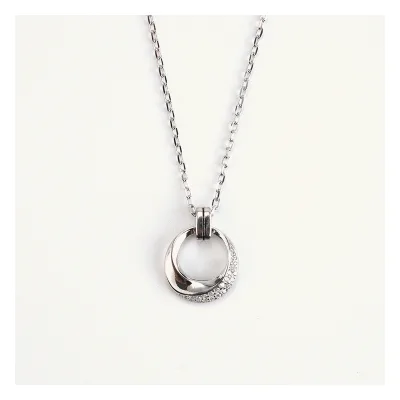


Comprehensive Sourcing Guide
Strategic Sourcing Guide for Charm Pendant Necklaces
The global market for jewelry accessories continues to evolve, with charm pendant necklaces representing a versatile category that bridges personal adornment and functional customization. For B2B buyers, sourcing this specific item type requires a nuanced understanding of material properties, manufacturing techniques, and supply chain logistics. The following guide synthesizes available product data and industry standards to provide a structured approach for procurement professionals. This analysis focuses on the technical realities of the supply chain, ensuring that decisions are grounded in verifiable attributes rather than speculative marketing claims.
Material Composition and Plating Standards
The foundation of any high-quality charm pendant necklace lies in its material composition and surface treatment. In the current supply landscape, stainless steel and 925 sterling silver emerge as the dominant base materials. Stainless steel offers a robust, cost-effective solution suitable for mass-market decoration and health-related accessories, while 925 sterling silver provides a premium alternative often associated with higher-end fashion lines. Buyers must verify the specific alloy composition, as the market frequently lists "Silver" alongside "Gold" or "Platinum" in plating descriptions, which can sometimes lead to confusion regarding the base metal versus the surface finish.
Plating technology is a critical differentiator in this category. Observed product data indicates a wide range of plating options, including Gold, Silver, Platinum, Rhodium, and Rose Gold. The durability of these finishes is often tied to the "Non-Fading" attribute, which is a key selling point for buyers seeking long-lasting inventory. However, specific color retention claims vary by finish; for instance, silver plating is frequently noted for non-fading properties, whereas gold and rose gold variants may have specific color retention protocols. When evaluating suppliers, procurement teams should request detailed plating thickness specifications and adhesion test results, as these metrics directly influence the product's lifespan in retail environments. The presence of "Nickel-Free" attributes is also essential for compliance with international safety standards, particularly for products intended for sensitive skin or general public consumption.
Technical Specifications and Customization Capabilities
Technical specifications for charm pendant necklaces are highly variable, dictated by the intended style and target demographic. The data reveals a diverse array of pendant shapes, including square, circle, flower, and round designs. These shapes are often paired with specific chain lengths, with standard offerings ranging from 15cm to 60cm, including extension chains such as 45cm+5cm or 50cm+6cm. The weight of the finished product is another significant variable, with observed listings ranging from approximately 10g to 32g. This variance impacts shipping costs and the perceived value of the item, requiring buyers to align their specifications with their target price points.
Customization is a central feature of the modern charm necklace supply chain. Most suppliers in this sector offer "Customized Logo" services and OEM/ODM capabilities, allowing brands to imprint their identity directly onto the product. The production technique for these customizations typically involves engraving and etching, which provides a permanent and high-quality finish. Lead times for these customized orders are distinct from standard stock items; while non-logoed items may be available with a lead time of 3 to 4 days, the addition of logo printing can extend the production cycle to approximately 15 days. Buyers must account for this discrepancy in their inventory planning to avoid stockouts during peak seasons. Furthermore, the "Style" attribute, ranging from "Simple" to "Fashion," dictates the design complexity and the associated tooling costs required for mold creation or setting adjustments.
Compliance, Safety, and Certification Verification
In the B2B jewelry sector, compliance is not merely a regulatory hurdle but a prerequisite for market access. While specific certification names are not universally standardized across all listings, the "Nickel-Free" attribute is a critical safety indicator that buyers must verify through third-party testing. Many regions, including the European Union and North America, have strict regulations regarding heavy metals in jewelry. The presence of "High Quality" and "Feature" attributes in product descriptions often implies adherence to these standards, but they do not replace the need for formal documentation.
Buyers should prioritize suppliers who can provide evidence of material purity, particularly for items claiming to be "925 Sterling Silver." The distinction between plated silver and solid silver is vital for pricing and consumer trust. Additionally, the "Health" usage attribute found in some product listings suggests potential claims regarding the benefits of the materials used, such as hypoallergenic properties. These claims require rigorous substantiation. Procurement teams should request test reports from accredited laboratories to validate any health-related assertions. Without such documentation, marketing these products as "health" accessories can expose the buyer to legal liability and reputational damage. The "Standard" attributes listed, such as specific chain lengths or model numbers, serve as internal quality benchmarks but do not constitute external regulatory compliance.
Cost Drivers and Pricing Dynamics
The pricing structure for charm pendant necklaces is influenced by a complex interplay of material costs, labor intensity, and order volume. The observed price range in the market spans from $0.10 to $22.99 USD, reflecting the vast difference between mass-produced stainless steel items and handcrafted sterling silver pieces. The Minimum Order Quantity (MOQ) is another significant cost driver, with observed ranges varying from 1 piece to 100 pieces, though specific listings often set MOQs at 20, 50, or 50 sets. These thresholds directly impact the unit cost; higher volumes typically yield lower per-unit prices due to economies of scale in production and shipping.
Payment terms also play a role in the overall cost of procurement. Standard industry practices include T/T (Telegraphic Transfer) and payment via digital platforms like "Pay on Mic." Buyers should negotiate payment schedules that align with their cash flow, potentially requesting a deposit structure that mitigates risk while securing production slots. The "Stock" availability is another factor; items listed as "All in Stock" may command a premium for immediate delivery but eliminate lead time risks, whereas custom orders require longer lead times but offer greater exclusivity. The "Packing" specifications, such as individual OPP bags or cartons, also contribute to the final landed cost, as specialized packaging for high-value items like sterling silver requires additional material and labor expenses.
Supplier Evaluation and Operational Logistics
Evaluating suppliers for charm pendant necklaces requires a holistic view of their operational capabilities. The "Place of Origin" is predominantly listed as Guangdong, China, a region known for its dense concentration of jewelry manufacturing clusters. This location offers advantages in terms of supply chain efficiency and access to raw materials, but it also necessitates careful vetting of individual factories. Buyers should assess the supplier's capacity to handle both standard and customized orders, as evidenced by their "Service" offerings like OEM and ODM.
Logistics and lead time management are critical components of supplier evaluation. The data indicates a clear distinction between standard lead times (3-4 days) and customized lead times (15 days). Suppliers must demonstrate the ability to meet these timelines consistently. Furthermore, the "Selling Units" and "Stock" status provide insight into the supplier's inventory management. A supplier offering "Single Item" sales may be more flexible for small retailers, while those requiring bulk orders may be better suited for large distributors. The "Product Name" and "Model Number" consistency across listings is also a proxy for organizational maturity; reliable suppliers maintain clear documentation and consistent product coding to prevent errors in fulfillment.
Quality Control and Long-Term Procurement Strategy
Implementing a robust quality control (QC) strategy is essential for maintaining brand integrity in the charm pendant necklace category. Given the variety of materials and plating techniques, QC protocols must be tailored to the specific product attributes. For items with "Engraving & Etching" techniques, visual inspection is paramount to ensure clarity and depth. For plated items, scratch resistance and color retention tests are necessary to verify the "Non-Fading" claims. Buyers should establish a clear acceptance criteria document that defines acceptable tolerances for weight, dimensions, and finish quality.
Long-term procurement considerations involve building a resilient supply chain that can adapt to market fluctuations. The "Customization" availability suggests that the market is moving towards personalized products, requiring suppliers with agile production lines. Buyers should consider diversifying their supplier base to mitigate risks associated with single-source dependencies. Additionally, the "Feature" attributes, such as "High Quality," should be treated as performance expectations rather than guarantees. Regular audits and sample testing should be integrated into the procurement cycle to ensure that the supplier continues to meet the evolving standards of the market. By focusing on these strategic elements, buyers can secure a reliable supply of charm pendant necklaces that meet both quality and commercial objectives.
Comparative Analysis of Product Attributes
To facilitate decision-making, the following table summarizes key product attributes observed in the market, highlighting the variations that buyers must navigate during the sourcing process.
| Attribute Category | Observed Variations | Procurement Consideration |
|---|---|---|
| Base Material | Stainless Steel, 925 Sterling Silver | Verify purity for silver; check alloy grade for steel. |
| Plating Options | Gold, Silver, Platinum, Rhodium, Rose Gold | Request plating thickness data; verify adhesion standards. |
| Pendant Shape | Square, Circle, Flower, Round | Align shape with target demographic and brand identity. |
| Chain Length | 15cm to 60cm (including extensions) | Confirm fit for target market; check extension chain quality. |
| Weight | Approx. 10g to 32g | Impact on shipping costs and perceived value. |
| Customization | Logo Printing, OEM, ODM | Account for extended lead times (up to 15 days). |
| MOQ | 1 to 100 units (specifics: 20, 50 sets) | Negotiate tiered pricing based on volume thresholds. |
| Lead Time | 3-4 days (Standard), 15 days (Custom) | Plan inventory cycles accordingly to avoid stockouts. |
| Safety Features | Nickel-Free, Non-Fading | Require third-party test reports for compliance. |
| Origin | Guangdong, China | Leverage regional supply chain efficiency; verify factory audits. |
This comparative overview underscores the necessity of detailed specification checks before finalizing any procurement agreement. The diversity in attributes allows for a wide range of product offerings but demands a rigorous vetting process to ensure consistency and quality.
Final Procurement Recommendations
Sourcing charm pendant necklaces effectively requires a balance between technical precision and strategic flexibility. Buyers must prioritize clear communication of specifications, particularly regarding materials, plating, and customization requirements. The variability in lead times and MOQs necessitates a proactive approach to inventory management, ensuring that production schedules align with market demand. By adhering to the standards and verification protocols outlined in this guide, procurement professionals can build a resilient supply chain that delivers high-quality products while mitigating the risks associated with the complex jewelry manufacturing landscape. The ultimate goal is to secure a partnership with suppliers who can consistently meet the evolving demands of the global market, delivering value through quality, compliance, and reliability.
FAQs
What materials are used for charm pendant necklaces?
Charm pendant necklaces are primarily made from stainless steel and 925 sterling silver. Stainless steel offers a cost-effective solution for mass-market decoration, while 925 sterling silver provides a premium alternative for high-end fashion lines.
Which plating options are available for these necklaces?
Available plating options include Gold, Silver, Platinum, Rhodium, and Rose Gold. Buyers should verify plating thickness and adhesion standards, as specific color retention varies by finish, with silver often noted for non-fading properties.
How long does it take to produce custom logo necklaces?
Custom logo printing requires approximately 15 days of lead time. Standard items without logos can be produced in 3 to 4 days, so buyers must account for this extended timeline when planning inventory for personalized orders.
What is the minimum order quantity for these products?
Minimum order quantities vary, with observed thresholds of 20 pieces, 50 pieces, or 50 sets. Specific MOQs depend on the supplier and product model, directly influencing unit costs and shipping logistics for bulk procurement.
Can buyers request customization for these necklaces?
Yes, customization is available including customized logos, OEM, and ODM services. Production techniques typically involve engraving and etching to ensure a permanent finish, allowing brands to imprint their identity directly onto the product.
Where are these charm pendant necklaces manufactured?
The products originate from Guangdong, China, a region known for dense jewelry manufacturing clusters. This location offers supply chain efficiency and access to raw materials, though individual factory vetting remains essential for quality assurance.
What safety features do these necklaces include?
Many listings feature Nickel-Free attributes to comply with international safety standards. Buyers should request third-party test reports to validate material purity and hypoallergenic claims, especially for products intended for sensitive skin or general public consumption.